

In today’s fast-paced business environment, staying competitive requires sharp strategic planning. One of the most effective tools for achieving this is the SWOT analysis — a time-tested framework that helps businesses assess their internal strengths and weaknesses, as well as external opportunities and threats. Whether you’re a startup looking to establish your footing or a well-established business aiming for growth, a well-conducted SWOT analysis is essential for guiding your strategy.
What is a SWOT Analysis?
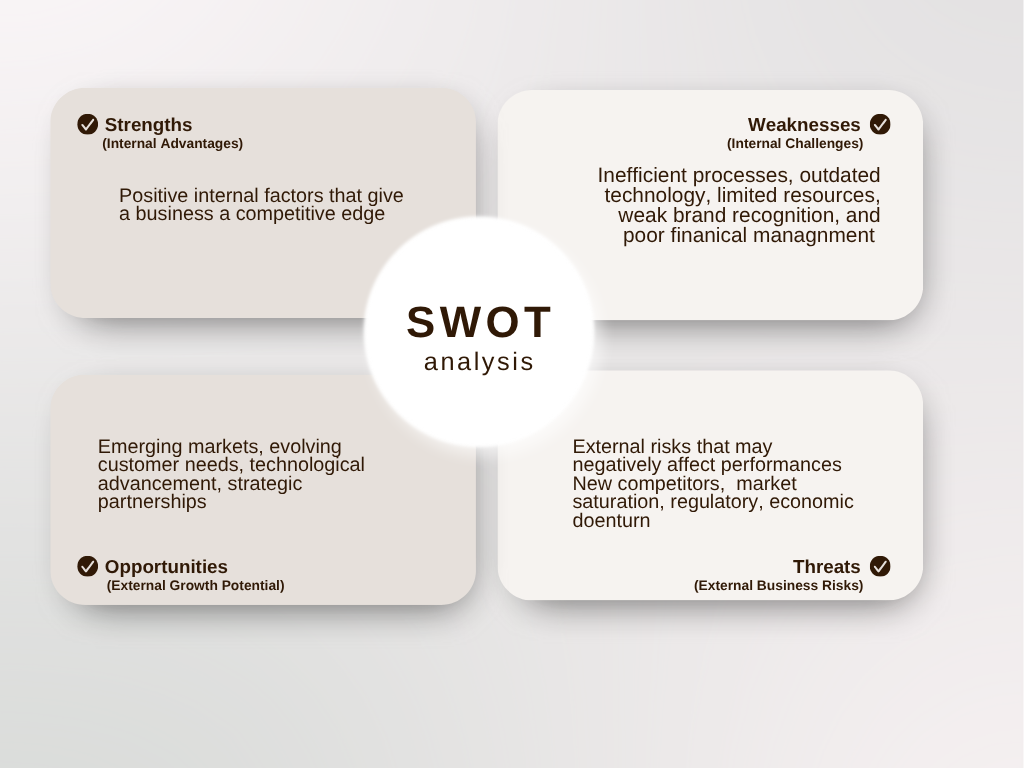
A SWOT analysis is a strategic tool that helps businesses evaluate their internal capabilities and external market factors to improve decision-making and long-term growth.
- Strengths – Internal Advantages: Strengths are the key internal factors that give a business a competitive edge in the market. Examples include a strong brand reputation, cutting-edge technology, skilled workforce, loyal customers, and efficient operational processes.
- Weaknesses – Internal Challenges: Weaknesses are internal limitations that can hold a business back from achieving its goals. These may include inefficient workflows, outdated technology, limited resources, weak brand recognition, or poor financial management.
- Opportunities – External Growth Potential: Opportunities are external factors businesses can leverage for expansion and success. These could be emerging markets, evolving consumer demands, technological advancements, or strategic partnerships.
- Threats – External Business Risks: Threats are external challenges that can negatively impact business performance. Common examples include new competitors, market saturation, regulatory changes, and economic downturns.
By conducting a SWOT analysis, businesses can identify where they excel, address weaknesses, seize market opportunities, and prepare for potential risks — ensuring a stronger and more competitive position
Why Conduct a SWOT Analysis in 2024?
As 2024 unfolds, businesses are navigating a rapidly evolving landscape marked by technological innovation, changing consumer behaviors, and intensifying competition. Conducting a SWOT analysis offers a structured, strategic method to assess these factors effectively. Whether your goal is to adapt to shifting market conditions, plan for business growth, or evaluate current performance, a SWOT analysis ensures your strategies remain aligned with your long-term objectives.
The Benefits of a SWOT Analysis
Conducting a SWOT analysis offers numerous advantages for businesses, from identifying hidden opportunities to spotting potential risks. Here are some of the key benefits:
1. Clarify Internal Strengths and Weaknesses
A SWOT analysis highlights what your business does well and where it can improve. This allows you to capitalize on your strengths while addressing critical weaknesses before they become major issues.
2. Spot External Opportunities and Threats
Understanding external market factors is essential for long-term success. A SWOT analysis helps you spot emerging trends or new customer segments that could provide growth opportunities, while also keeping an eye on potential threats like new competitors or regulatory shifts.
3. Focus Your Strategic Goals
By laying out all factors in one framework, a SWOT analysis helps businesses stay focused on their core objectives. This ensures resources are used effectively, with efforts directed toward the most impactful areas.
4. Improve Collaboration and Communication
A SWOT analysis encourages different teams to come together and share their perspectives, fostering greater communication and alignment across the organization. This ensures that everyone is working toward the same strategic goals.
5. Make Informed, Data-Driven Decisions
When you understand both the internal and external factors impacting your business, it becomes easier to make informed decisions. This improves planning, budgeting, and overall strategic direction.
Potential Drawbacks of SWOT Analysis
While a SWOT analysis can be a powerful tool, there are certain limitations to keep in mind:
- Time-Consuming Process: Conducting a comprehensive SWOT analysis can take time, especially when gathering data from multiple sources and stakeholders.
- Risk of Bias: The analysis can be subjective, as the interpretation of strengths, weaknesses, opportunities, and threats often depends on individual perspectives.
- Needs Regular Updates: Market conditions change frequently, so to keep the analysis relevant, it needs to be updated regularly to reflect new developments.
Breaking Down the Four Components of SWOT Analysis
1. Strengths
Start by identifying your internal strengths. What sets your business apart from competitors? These could be unique selling propositions, strong supplier relationships, superior products, or a talented team. Ask questions like:
- What processes are working exceptionally well?
- What competitive advantages do we have in the market?
- What resources and skills does our team possess that others lack?
2. Weaknesses
Next, take an honest look at your internal weaknesses. What aspects of your business are holding you back? This can include a lack of resources, inefficiencies in operations, or skill gaps. Identifying weaknesses allows you to develop strategies to address them. Consider:
- What could we improve internally to perform better?
- Are there gaps in our skills or resources?
- How do competitors outshine us?
3. Opportunities
Opportunities are external factors that your business can take advantage of. These can include market trends, new technology, or changes in customer behavior. Look for areas where your business can grow or expand. Ask questions like:
- What market trends can we leverage?
- Are there emerging customer needs we can address?
- Can we enter new markets or expand our current offerings?
4. Threats
Finally, assess external threats that could negatively impact your business. These can range from new competitors entering the market to economic downturns or regulatory changes. By identifying threats early, you can develop contingency plans to mitigate risks. Consider:
- What external challenges could harm our business?
- Are competitors gaining ground?
- Are there upcoming regulatory or economic changes that could pose a risk?
Internal vs. External Factors: A Balanced Approach
It’s essential to understand the distinction between internal and external factors in a SWOT analysis. Internal factors (strengths and weaknesses) are within your control — these include team skills, processes, and resources. External factors (opportunities and threats) are outside your control, such as market trends, regulatory changes, and competitor actions. Balancing these perspectives gives you a well-rounded view of your business environment.
How to Get the Most Out of a SWOT Analysis in 2024
- Involve Multiple Stakeholders: Gather insights from different departments to get a holistic view.
- Use Data: Rely on data-driven insights to avoid biases and make your analysis more objective.
- Revisit Regularly: Markets change, so make sure to update your SWOT analysis frequently.
- Prioritize Actionable Insights: Focus on what you can change or leverage, and create specific action plans to address weaknesses and threats while capitalizing on strengths and opportunities.
Conclusion: Build a Winning Strategy with SWOT in 2024
In 2024, a SWOT analysis remains one of the most effective strategic planning tools for businesses aiming to stay competitive. By leveraging your strengths, resolving weaknesses, and proactively identifying opportunities and threats, you can build a clear roadmap for sustainable growth in a rapidly changing marketplace.
Begin your SWOT analysis today to give your business the clarity, focus, and direction it needs to not only survive but thrive in 2024 and the years ahead.


Post a Comment